
The short version: bring more than you think, and don't agonise over it.
We test everything on camera, in real time, on the screen - so every wardrobe decision gets made on real evidence, not a guess. You can't get this part wrong. As long as you bring lots of options.
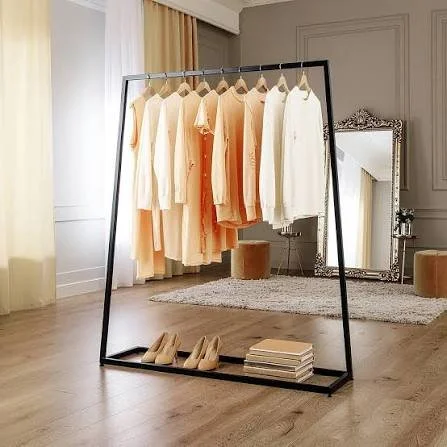
Clothes don't behave on camera the way they do in the mirror
Two things happen in almost every session.
I - Something you love lets you down.
Sometimes your most expensive… your most "this is my power piece" item simply doesn't work. Sometimes it’s the structure of the fabric sitting vs standing… or texture in certain light… or the contrast against a particular background… Someone arrived once in one of the best suits I've ever seen - beautifully made, the piece she wore for every talk, the one that made her feel unstoppable. We did a test shot and the texture fell apart on camera. We stood there looking at the monitor, then back at the suit, then back at the monitor. Neither of us could believe it was the same garment. The problem was - that was all she bought! So the whole session became about making that one particular suit work.
II - Something you'd overlook turns out perfect.
Just as often it's the old thing - the plain piece you've worn for years, the one that's just you. I've got a plain grey collared shirt I've had forever. Casual, simple, somehow right for everything. If someone pointed a camera at me, it'd come with me.
You can't reliably pick which is which beforehand. Fabric, texture, pattern, fit, the way something sits when you sit - any tiny detail that's invisible in real life can decide a shot. Which is exactly why we bring options and test them - on screen, under the lights, in the actual context of each set up.
How much to bring
For a longer session
10–15 tops - go wide: colours, patterns, textures, necklines, sleeve lengths, fits
3 bottoms - skirts, dresses, trousers, jeans
1–2 pairs of shoes - we rarely shoot full length, so shoes matter less; the exception is something like a seated, cross-legged pose
5 or so necklaces and pairs of earrings - vary the size, length and colour; don't just bring your favourite
For a shorter session
5–10 tops - same idea, wide variety
3 bottoms
Shoes usually don't come into it
5 or so necklaces and pairs of earrings
We might only use two or three outfits in the end - but we'll have tried more, and we'll have chosen from real options instead of hoping.
Colour and pattern
From behind the lens, the guidance is simple: the simpler, the better. The less your clothing competes, the more room there is for the expression we spend the whole session finding.
A single block colour is hard to beat. A bold tone or a clean dark shirt is one of the strongest ways to frame a face. And white can be surprisingly beautiful on camera - especially on a white background.
Should you wear black? Maybe. Black isn't universally flattering, especially if you're fair, and especially on camera. It can flatten you out and pull the life from your skin. If that's you, navy or charcoal give you a dark neutral without the drain. If black is your signature, wear it - just bring other options too. People are often surprised when they see themselves in something else.
Wild patterns? If pattern is how you express yourself - abstract, floral, bold - bring it. It's trickier, because what reads as fluid and alive in person can turn busy and distracting once it's frozen in a frame. I can almost always make one or two work. Just don't let it be all you bring.
I’ll never forget the client that showed up with all Gorman clothes. And if you’re familiar with the brand, you won’t be surprised that the jumpsuit covered in jellyfish was a tricky outfit to work with.
Bring one bold piece
Bring something that pushes you slightly past comfortable - the adventurous thing you bought in a brave moment and have never quite worn. Bring that.
I also recommend bringing something way more formal than you’d expect… And something way more casual than you’d expect. I can’t tell you how many times clients end up in a pair of jeans and a white t-shirt, barefoot. I’d almost never suggest it, but that’s what transpires… and often becomes the favourite shot of the day.
We'll test it like everything else, and if it doesn't work we set it aside and move on. No cost to trying. But if you don’t have it, we can’t try it.
A few notes for women
Sleeves — if you mostly wear sleeveless, bring some sleeved options or jackets; bare arms can read awkwardly in certain poses and frames
Necklines — one of the sneakiest variables in a shot; bring a range
Fabrics — a mix of lighter and heavier; if you live in structured pieces they can read as ‘heavy’ or overly bulky in a frame. We frequently nail a couple shots with the Scanlan Theodore suit… and then opt for something lighter and softer moving forward.
Jewellery — the necklace matters most; alongside hair and neckline, it's one of the things framing your face. Earrings come second — short hair makes them count for more, voluminous hair less
Bring something more formal than you think you'll want
Bring something more casual than you think you'll want
A few notes for men
Fit is king. A well-fitting tailored piece always wins. An oversized suit - whether it cost $120 or $12,000 - reads as ‘out of your depth’, and the camera says so plainly. We can pinch and clip a little behind the scenes, but nothing beats clothes that actually fit
Bring options — a couple of jackets, a few shirts, ties if ties are your thing
Bring something more formal than you'd expect to wear
Bring something more casual than you'd expect to wear
Don't arrive in a shirt you plan to shoot in - bring it fresh on a hanger
Final Note - Nothing is written in stone
These are guidelines from more than fifteen years of doing this. What wors (and what doesn’t) still surprises me almost daily.